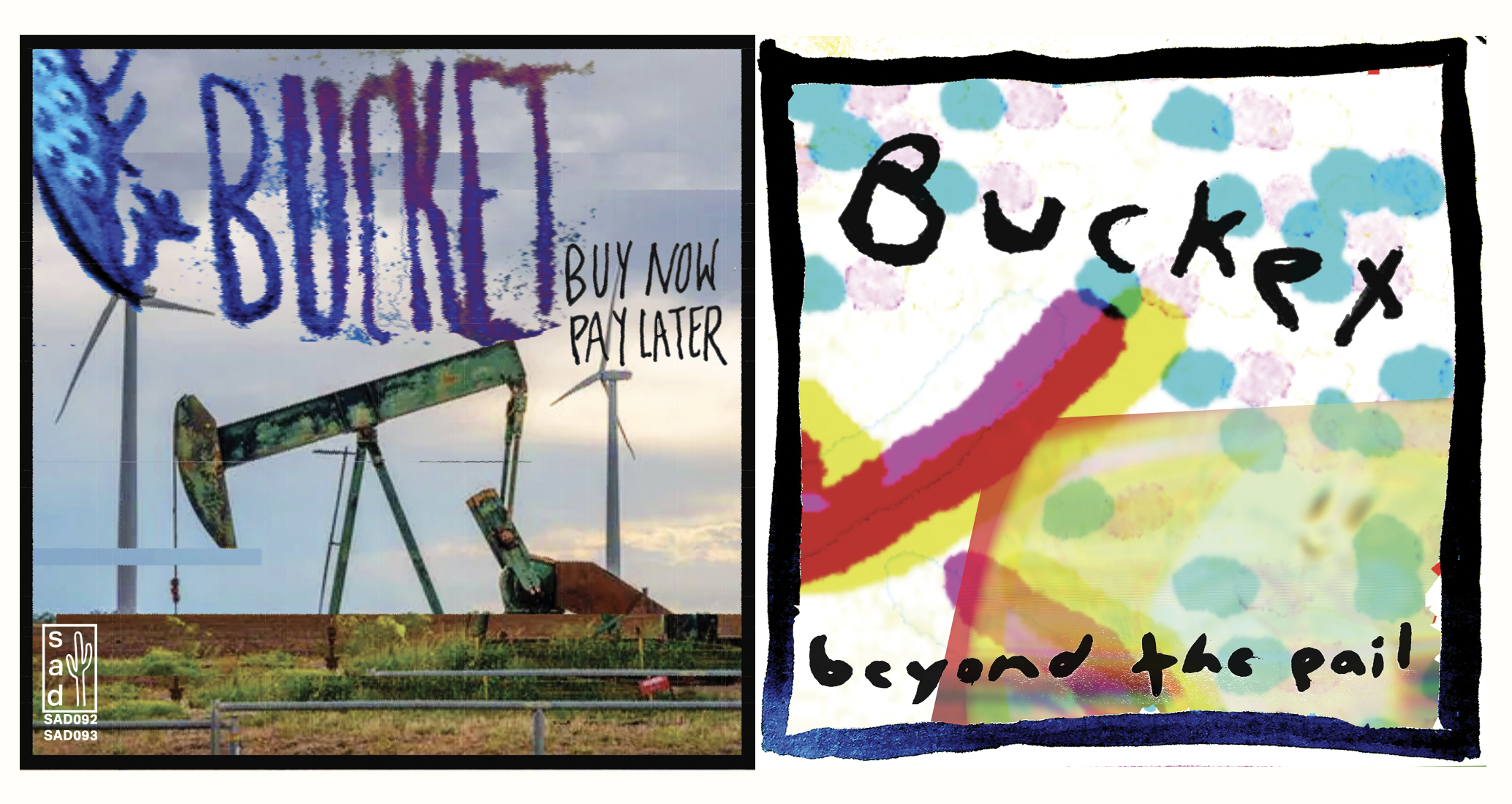
Bucket "Beyond The Pail / Buy Now Pay Later" SAD093
What does thirteen years sound like? Western Massachusetts rock band Bucket has been trying to find out. In late 2013, guitarist and songwriter Will Meyer phoned drummer Ryan Severin, “Hey man, do you want to come over tonight and write a grunge record back to front?” That sense of urgency didn’t last. It’s been nine years since the band released their first EP Bouquet (Sad Cactus, 2017). Life happened. Other musical projects took shape, fizzled out. One member got injured. Another moved away. But in January 2026, the band reunited and visited bassist Eli Salus-Kleiner in his adopted Los Angeles and recorded two EPs. The session deployed Meyer’s acerbic songwriting and guitarist Gage Lyons’ crunchy twang to bridge the dissonant riffs of Bucket’s past with the alt-country flair of its present.
The first of two EPs, Beyond the Pail, could have been the b-side of its predecessor, but also clue listeners in on what’s to come. The release's three songs were all written around the end of 2016, when Bouquet was recorded, and leans into triumphant riffs and catchy choruses. The first track No Guitars’ iconic hook—where the whole band sings “What am I afraid of? What do I want?”—has lingered with fans as they peel back the layers. Good Intentions opens with a proto-punk, dissonant tritone riff right in Bucket’s pocket, but drops into half time for a country-adjacent chorus, bridging one era with the next.
The second EP, Buy Now Pay Later, borrows from the high-prophets of frictionless debt-trap schemes to speak to the turmoil of the human heart scrolling for meaning in 2026. These songs were written as the band prepared for the session. Meyer drove across the country and took in the endless desert, writing along the way. The band was joined by Salus-Kleiner’s musical collaborator Connor “Catfish” Gallaher on pedal steele and tele—adding a little country cookin’ to the slacker sauce Bucket is known for. But the band lands in a territory that is a bit more mature, more confident, and, most of all, more honest. Where Meyer’s songs previously looked out and critiqued, Buy Now Pay Later feels peers inward, just enough to leave listeners guessing. Perhaps tuning into the radio frequencies of impending middle age and coming out a bit more Wilco-like than anyone anticipated, Buy Now may be yet another bridge towards the next thirteen years.